

剛果民主共和國(guó):和平茅草屋
2011-12-13 14:03:00 來(lái)源: 大眾網(wǎng) 我要評(píng)論
[提要] 該獎(jiǎng)授予Collectif Alpha UJUVI的“掃盲促進(jìn)社會(huì)和平共存和良好治理項(xiàng)目”。該項(xiàng)目于2010年在北部奇夫開始實(shí)施。該省長(zhǎng)期以來(lái)飽受政治動(dòng)蕩之苦,人口大批流亡,導(dǎo)致了長(zhǎng)期的不安全和缺乏和平。
剛果民主共和國(guó)
和平茅草屋和掃盲為政治動(dòng)蕩的北部奇夫帶來(lái)安全
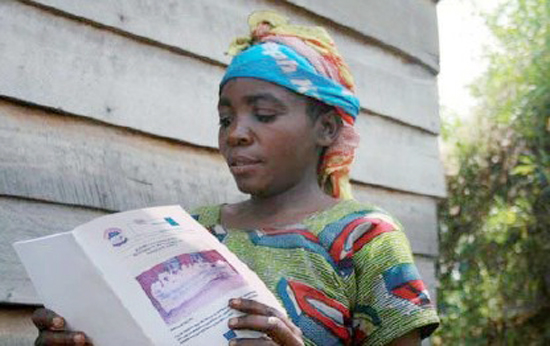
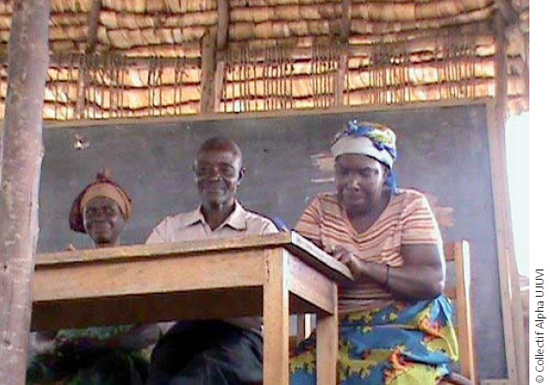
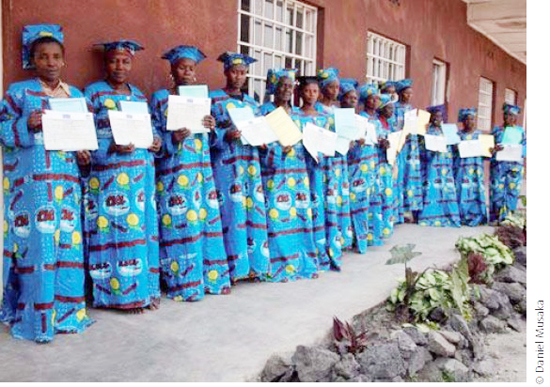
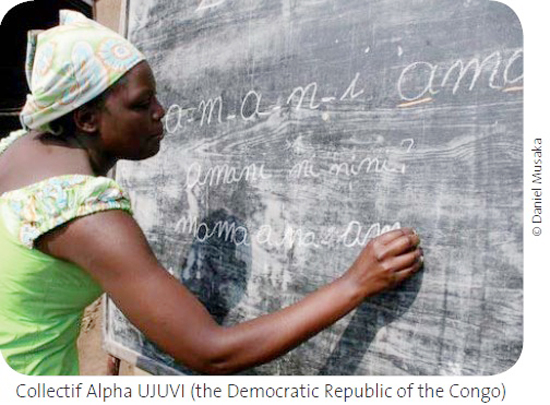
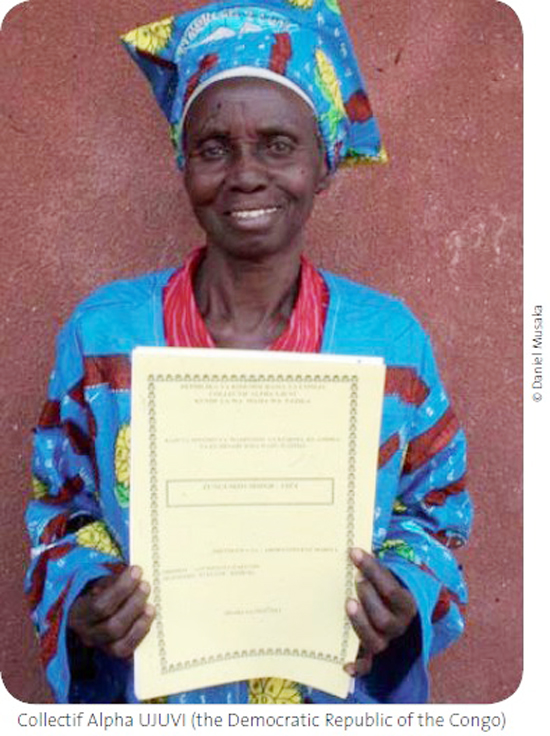
和平茅草屋旨在消除沖突,也是剛果民主共和國(guó)所開展的掃盲計(jì)劃的一個(gè)組成部分。該計(jì)劃贏得了聯(lián)合國(guó)教科文組織的孔子教育獎(jiǎng)
該獎(jiǎng)授予Collectif Alpha UJUVI的“掃盲促進(jìn)社會(huì)和平共存和良好治理項(xiàng)目”。該項(xiàng)目于2010年在北部奇夫開始實(shí)施。該省長(zhǎng)期以來(lái)飽受政治動(dòng)蕩之苦,人口大批流亡,導(dǎo)致了長(zhǎng)期的不安全和缺乏和平。
在Deodata Bunzigiye修女的指導(dǎo)下,這一創(chuàng)新計(jì)劃通過(guò)掃盲防范和消除該地區(qū)個(gè)人和社區(qū)之間的緊張局勢(shì)和沖突。
項(xiàng)目旨在培訓(xùn)教師的掃盲技能,提高社區(qū)掃盲意識(shí),并在各個(gè)掃盲中心間建立協(xié)調(diào)機(jī)制,監(jiān)督并評(píng)估其工作。
2006年,掃盲工作人員通過(guò)學(xué)習(xí)者對(duì)話了解到大多數(shù)個(gè)人和社區(qū)均存在沖突,該計(jì)劃確定了新的方向。
Collectif Alpha Ujuv1決定直接面對(duì)這一問(wèn)題,并在針對(duì)新脫盲者開展的工作中納入問(wèn)題的解決方法。
該機(jī)構(gòu)開展了一項(xiàng)沖突的預(yù)防、調(diào)解、管理和良好治理的培訓(xùn),還制定了一項(xiàng)納入上述元素的計(jì)劃。該培訓(xùn)也被納入了北部奇夫地區(qū)的和平教育。
新脫盲者選擇傳統(tǒng)的問(wèn)題解決方式和討論方式,和平茅草屋發(fā)揮了中立和促進(jìn)友好的規(guī)劃的作用。該計(jì)劃還旨在鼓勵(lì)婦女參與社區(qū)核心決策并提高婦女地位。
學(xué)習(xí)者的任務(wù)是促進(jìn)社區(qū)領(lǐng)袖、公眾以及政府間的交流、規(guī)劃和合作。每天消除兩個(gè)沖突一年就可以解決576個(gè)沖突。該計(jì)劃自啟動(dòng)以來(lái),已有10980人參與了和平茅草屋的活動(dòng),該活動(dòng)同時(shí)也舉辦以斯瓦西里語(yǔ)和法語(yǔ)教學(xué)的針對(duì)成人和青年的掃盲課程。
課程學(xué)習(xí)強(qiáng)化了和平茅草屋的這一模式,納入了和平、良好治理、沖突、暴力、共同生活、腐敗、部落主義、權(quán)利、財(cái)富、決策、領(lǐng)導(dǎo)能力和仇恨。Louise Cheftaine講述了她學(xué)到的新能力幫助她為自己的社區(qū)帶來(lái)和平。“由于沒(méi)有文化,我深受其苦。在我們的社會(huì)里,教育婦女被認(rèn)為是浪費(fèi)時(shí)間,因?yàn)樗齻冏詈缶褪亲黾覄?wù)。我的父母也認(rèn)同這一種落后的想法,因此家里人不認(rèn)為我是家里的后裔,我被剝奪了繼承的權(quán)利。在我們那兒非常不安全,對(duì)此我無(wú)能為力。自從我參加了掃盲計(jì)劃,我感覺(jué)我獲得了自由。我參與解決社區(qū)問(wèn)題,通過(guò)與社區(qū)領(lǐng)袖合作和討論,我已經(jīng)促進(jìn)了不安全因素的消除。”
學(xué)習(xí)者M(jìn)apendon Furaha說(shuō):“因?yàn)槲冶仨氄疹櫸业男值芙忝谩⒅蹲雍椭杜虼宋覐膩?lái)沒(méi)有機(jī)會(huì)學(xué)習(xí)。我一輩子都感覺(jué)到?jīng)]人聽我的。甚至我的丈夫也把我當(dāng)成一個(gè)傻瓜,因?yàn)槲覜](méi)有受過(guò)教育。在參加了掃盲課程之后,我能讀能寫能算了。讓我非常高興的是,我的家人現(xiàn)在對(duì)我很尊重。我已經(jīng)是Baraza(和平茅草屋)的顧問(wèn),每個(gè)人都聽我的意見(jiàn)來(lái)做決定。”本計(jì)劃得到了聯(lián)合國(guó)教科文組織、聯(lián)合國(guó)人口基金會(huì)和行動(dòng)援助等國(guó)際組織的支持。
www.alphaujuvi.net
Mary de Soesa
Nepal Reading time in the Library
Peace huts and literacy bring security to politically unstable communities in North Kivu
DEMOCRATIC REPUBLIC OF THE CONGO
The Collectif Alpha UJUVI in the Democratic Republic of the Congo, has been awarded the 2011 UNESCO Confucius Prize for Literacy for its programme on Literacy for the peaceful coexistence of communities and good governance in North Kivu Peace Huts used for conflict resolution form part of a literacy programme in the Democratic Republic of the Congo which has won one of the two awards of the UNESCO Confucius Prize for Literacy.
The award was given to the Collectif Alpha UJUVI for its programme “Literacy for the peaceful coexistence of communities and good governance” which started in North Kivu in 2010. The province has suffered long-term political instability and massive displacement of populations leading to permanent insecurity and lack of peace.
Under the direction of Sister Deodata Bunzigiye the innovative programme uses literacy to prevent and resolve tensions and conflicts among individuals and communities in the region.
Its objectives are to train trainers in literacy techniques, sensitize communities about illiteracy, build coordination among literacy centres and supervise and evaluate their work.
The programme took a new direction in 2006 when literacy workers realized through dialogue with learners that there were conflicts between individuals and between communities in the majority of literacy circles.
The Collectif Alpha UJUVI decided to confront the problem and incorporate the solution into work with the newly literate. A training on prevention, mediation, and management of conflict and good governance and a programme incorporating these elements was created. The training was incorporated into the promotion of peace education in North Kivu.
Newly-literate learners opted for a traditional Kivu method of problem resolution and discussion, the Peace Hut, which would act as a neutral and friendly dialogue space. The programme also aimed specifically to integrate women into the decision-making process at the heart of the community and improve their status.
The task of the learners was to promote exchanges and dialogue and cooperation between community leaders, the population and authorities taking into account different local characteristics of North Kivu’s six territories. Each week two cases of conflict are dealt with, equalling 576 cases resolved each year. Since its launch 10,980 people have taken part in the Peace Hut scheme which runs alongside literacy classes for adults and young people in both Swahili and French.
Subjects in the classroom reinforce the Peace Hut formula and include peace, good governance, conflict, violence, cohabitation, corruption, tribalism, power, riches, decision-making, being a leader and hatred.
Louise Cheftaine described how her new abilities had helped to bring peace to her neighbourhood. “I suffered a great deal because of my illiteracy. In this society it is considered a waste of time to educate a woman because she will just end up doing the housework. My parents believed in this non-progressive philosophy and as a result I was not considered an heir and deprived of my inheritance.
Also in my neighbourhood there was huge insecurity and I could do nothing about it. Since I followed the literacy programme I feel free. I am involved in trying to resolve problems in my community and thanks to collaboration and discussion with local leaders I have been instrumental in removing the insecurity.”
Learner Mapendon Furaha said: “I never had the chance to study because I was obliged to look after my brothers and sisters and later my nephews and nieces. All my life I had the impression that no one listened to me.
Even my husband treated my like a simpleton because I hadn’t studied. After following the literacy course I am able to read, write and calculate. To my profound joy my family now treat me with some esteem and consideration.
I have become a member of Baraza (Peace Hut) as a counsellor and everyone counts on my opinion to take decisions.”
The programme is supported by UNESCO, UNFPA and Action Aid among others.
www.alphaujuvi.net
Mary de Sousa

更多新聞
- 專訪聯(lián)合國(guó)教科文組織總部代表
- 教科文組織總干事在國(guó)際掃盲日的致辭
- 專訪“共同的阿爾法·烏祖威”項(xiàng)目負(fù)責(zé)人
- 專訪美國(guó)“讀書空間”項(xiàng)目負(fù)責(zé)人
- 專訪巴基斯坦旁遮普邦政府掃盲秘書
相關(guān)閱讀


大眾網(wǎng)版權(quán)與免責(zé)聲明
1、大眾網(wǎng)所有內(nèi)容的版權(quán)均屬于作者或頁(yè)面內(nèi)聲明的版權(quán)人。未經(jīng)大眾網(wǎng)的書面許可,任何其他個(gè)人或組織均不得以任何形式將大眾網(wǎng)的各項(xiàng)資源轉(zhuǎn)載、復(fù)制、編輯或發(fā)布使用于其他任何場(chǎng)合;不得把其中任何形式的資訊散發(fā)給其他方,不可把這些信息在其他的服務(wù)器或文檔中作鏡像復(fù)制或保存;不得修改或再使用大眾網(wǎng)的任何資源。若有意轉(zhuǎn)載本站信息資料,必需取得大眾網(wǎng)書面授權(quán)。
2、已經(jīng)本網(wǎng)授權(quán)使用作品的,應(yīng)在授權(quán)范圍內(nèi)使用,并注明“來(lái)源:大眾網(wǎng)”。違反上述聲明者,本網(wǎng)將追究其相關(guān)法律責(zé)任。
3、凡本網(wǎng)注明“來(lái)源:XXX(非大眾網(wǎng))”的作品,均轉(zhuǎn)載自其它媒體,轉(zhuǎn)載目的在于傳遞更多信息,并不代表本網(wǎng)贊同其觀點(diǎn)和對(duì)其真實(shí)性負(fù)責(zé)。本網(wǎng)轉(zhuǎn)載其他媒體之稿件,意在為公眾提供免費(fèi)服務(wù)。如稿件版權(quán)單位或個(gè)人不想在本網(wǎng)發(fā)布,可與本網(wǎng)聯(lián)系,本網(wǎng)視情況可立即將其撤除。
4、如因作品內(nèi)容、版權(quán)和其它問(wèn)題需要同本網(wǎng)聯(lián)系的,請(qǐng)30日內(nèi)進(jìn)行。

