

巴基斯坦掃盲項(xiàng)目:數(shù)百萬(wàn)人受益
2011-12-13 14:07:00 來(lái)源: 大眾網(wǎng) 我要評(píng)論
[提要] 為磚窯里的童工帶去改變命運(yùn)的課程,這是巴基斯坦掃盲項(xiàng)目領(lǐng)導(dǎo)獲得孔子教育獎(jiǎng)榮譽(yù)獎(jiǎng)的原因第一。該獎(jiǎng)授予巴基斯坦遮邦政府官員阿拉赫·巴克什·馬里克,以表彰其在成人教育和技術(shù)職業(yè)教育中發(fā)揮的領(lǐng)導(dǎo)作用。
巴基斯坦
面向童工、婦女和邊緣群體的巴基斯坦掃盲項(xiàng)目
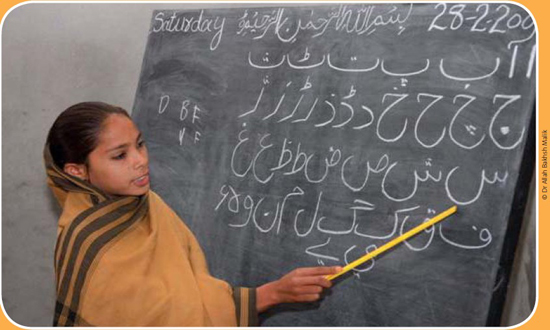
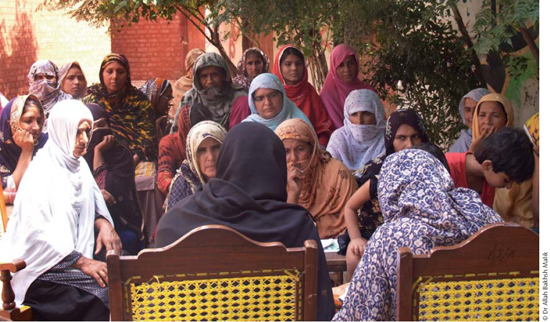
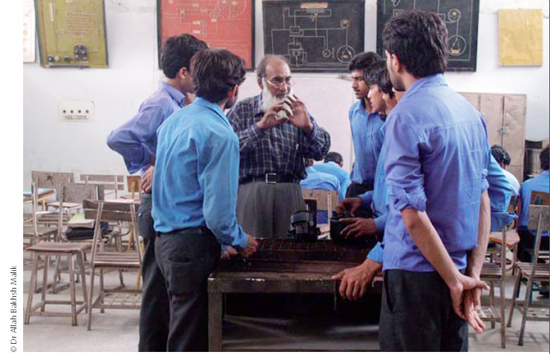
巴基斯坦旁遮普邦掃盲與非正規(guī)基礎(chǔ)教育部門(mén)秘書(shū)阿拉赫·巴克什·馬里克博士因其成人教育和職業(yè)技能教育項(xiàng)目獲得孔子教育獎(jiǎng)榮譽(yù)獎(jiǎng)
為磚窯里的童工帶去改變命運(yùn)的課程,這是巴基斯坦掃盲項(xiàng)目領(lǐng)導(dǎo)獲得孔子教育獎(jiǎng)榮譽(yù)獎(jiǎng)的原因第一。該獎(jiǎng)授予巴基斯坦遮邦政府官員阿拉赫·巴克什·馬里克,以表彰其在成人教育和技術(shù)職業(yè)教育中發(fā)揮的領(lǐng)導(dǎo)作用。
“2020年使旁遮普邦掃除文盲”包含六個(gè)項(xiàng)目,目前已經(jīng)幫助了120萬(wàn)5-14歲的失學(xué)兒童完成初等教育,其中60%為女童;同時(shí)幫助190萬(wàn)成人獲得基本的讀寫(xiě)能力和進(jìn)一步學(xué)習(xí)的技能。旁遮普邦有4000萬(wàn)文盲和380萬(wàn)輟學(xué)兒童,其中大多數(shù)為婦女和女童,大多居于貧民窟和最貧困的農(nóng)村地區(qū)。
該項(xiàng)目于2009年發(fā)起,計(jì)劃于2012年止,目標(biāo)群體為邊緣人群,包括從未上學(xué)的兒童及成人文盲,特別是生活在貧民窟和旁遮普邦掃盲水平最低的農(nóng)村地區(qū)的婦女。
馬里克博士設(shè)計(jì)并實(shí)施了六個(gè)計(jì)劃,其財(cái)政支持來(lái)自巴基斯坦政府、聯(lián)合國(guó)教科文組織、日本國(guó)際合作機(jī)構(gòu)、英國(guó)國(guó)際合作部及世界銀行都給予了技術(shù)支持。
他說(shuō),一開(kāi)始通過(guò)宣傳活動(dòng)介紹職業(yè)技術(shù)課程來(lái)消除掃盲的障礙。同時(shí)也讓家長(zhǎng)們和童工們知道,一旦他們的孩子接受掃盲之后,其收入將會(huì)有所增加。
薩比哈·喀恩是來(lái)自拉哈兒附近的小城穆扎發(fā)哈赫,以前是個(gè)女傭,而6個(gè)月的功能性掃盲和技術(shù)培訓(xùn)改變了她的一生。她說(shuō):“我學(xué)習(xí)了讀、寫(xiě)、簡(jiǎn)單的算術(shù)以及針線活兒,三個(gè)月后我自己買(mǎi)了一臺(tái)機(jī)器開(kāi)始縫制女士成衣,每天掙500-600塊。我還買(mǎi)了縫紉機(jī)和刺繡機(jī),開(kāi)始設(shè)計(jì)婚紗,兩年后,我自己開(kāi)始做起了生意,雇傭了20個(gè)技工。我的孩子們上了公立學(xué)校,現(xiàn)在我的家庭過(guò)上了寬裕的生活。
11歲的塞亞在非正規(guī)基礎(chǔ)教育學(xué)校獲得了第二次受教育的機(jī)會(huì)。現(xiàn)在她已經(jīng)完成了初等教育并且將進(jìn)入正規(guī)主流的教育系統(tǒng)。“掃盲給我的生活帶來(lái)了第二次契機(jī)”,她說(shuō),“我原本想成為一個(gè)醫(yī)生,但是在我過(guò)了入學(xué)年齡的時(shí)候我想那便成了一個(gè)夢(mèng)想,現(xiàn)在我的夢(mèng)想又開(kāi)現(xiàn)實(shí)起來(lái)了。”
項(xiàng)目的成果還包括:
自2009年以來(lái)開(kāi)展的加強(qiáng)掃盲運(yùn)動(dòng)已使1300萬(wàn)人受益;
成立了300個(gè)成人掃盲中心和200個(gè)減災(zāi)磚窯場(chǎng)的非正規(guī)基礎(chǔ)教育學(xué)校,為4000個(gè)成人和5500名兒童提供掃盲;
建立社區(qū)學(xué)習(xí)中心,為2400名婦女提供技能型掃盲;
通過(guò)旁遮普掃盲和生活項(xiàng)目,向7500人提供掃盲和技能培訓(xùn);
在非正規(guī)教育部門(mén)培訓(xùn)1.24萬(wàn)教學(xué)法老師;
馬里克說(shuō):“文盲帶來(lái)嚴(yán)重的經(jīng)濟(jì)和社會(huì)后果。掃盲將個(gè)體轉(zhuǎn)變成有知識(shí)的勞動(dòng)者,對(duì)社會(huì)人力資源的形式有著核心作用。同時(shí)掃盲也是保護(hù)和平的盾牌。”該項(xiàng)目推廣到了巴基斯坦其他地區(qū),以及阿富汗、孟加拉國(guó)和印度。
www.Literacy.gop.pk
www.punjab.gop.pk
Mary de Sousa
Child labourers, women and the marginalized targeted by Pakistani literacy programme
Dr Allah Bakhsh Malik, Secretary of the Department of Literacy and Non-formal Basic Education, Punjab Province, Pakistan, was awarded the Honorable
Mention of the UNESCO Confucius Prize for Literacy for the Adult Education and Vocational skills programme
Life-changing courses for child workers in the brick kiln industry are among the initiatives that have helped the head of a Pakistani literacy project gain the Honourable Mention of the UNESCO Confucius Prize for Literacy. Government Secretary of the Punjab Literacy and Non-formal Basic Education Department, Dr Allah Bakhsh Malik, was awarded the mention for his leadership role in the Literacy, Adult Education and Vocational Skills programme.
Through six projects the ongoing programme which runs under the banner “Making Punjab literate by 2020” has enabled 1.2 million out-of-school children aged 5-14, 60 per cent of them girls, to complete primary education and given literacy and life skills to a further 1.9 million adults. The Punjab has 40 million illiterate adults and 3.8 million out-of-school children with girls and women in slums and rural areas the most disadvantaged.
Launched in 2009, the programme, which runs until 2012, is directed at marginalized groups including children who have never gone to school and adult illiterates, particularly women, living in urban slum and rural areas of the Punjab where literacy levels are lowest.
Dr Malik devised and implemented the six projects with funding from the Pakistani government and technical assistance from organizations including UNESCO, the Japan International Cooperation Agency (JICA), the Department for International Development, United Kingdom (DFID) and the World Bank.
He said that initial resistance to the literacy programme was overcome with the introduction of vocational skills courses offered alongside and backed by advocacy and awareness campaigns. Parents of child labourers also had to be convinced that their working children would increase their income level later in life as a result of becoming literate.
For 24-year-old former housemaid Sabiha Khan from Muzaffargarh, near Lahore, one six-month functional literacy and skills programme changed her life. She said: “I learnt reading, writing and simple arithmetic calculations along with sewing and stitching. After three months I purchased my own machine and began stitching clothes for ladies and started earning PKR 500-600 per day. I purchased sewing and embroidery machines and started designing bridal costumes. Now after two years, I have my own business, employing 20 skilled workers. My children have started attending public schools and my family is leading a prosperous life.”
Eleven-year-old Saira was given a second chance at learning by joining a Non-Formal Basic Education School. She has now completed the primary level and will join the formal mainstream system. “Literacy has given me a second lease of life,” she said. “I wanted to become a doctor but since I passed the school-going age that was a dream. Now my dream has materialized.”
Achievements across the range of projects include:
the Campaign for Enhancement of Literacy which has reached 13 million people since its inception in 2009
establishing 300 Adult Literacy Centres and 200 Non-Formal Basic Education schools at brick kiln sites providing literacy to more than 4000 adults and 5,500 children
establishing Community Learning Centers to provide literacy to skills training to 2400 women
imparting literacy and skills training to 7500 people through the Punjab Literacy and Livelihood Programme
training 12,400 teachers in teaching methodology of Non-Formal Education Sector
Dr Malik said: “The economic and social consequences of illiteracy are huge. Literacy transforms individuals into knowledge workers and is central to the formation of human social capital. Literacy is also a shield for peace.”
The programme has been replicated in other areas of Pakistan as well as in Afghanistan, Bangladesh and India.
www.Literacy.gop.pk
www.Punjab.gop.pk
Mary de Sousa

更多新聞
- 教科文組織總干事在國(guó)際掃盲日的致辭
- 第六聯(lián)合國(guó)教科文組織孔子教育獎(jiǎng)
- 剛果民主共和國(guó):和平茅草屋
- 美國(guó)閱讀空間:培養(yǎng)閱讀習(xí)慣
- 獲獎(jiǎng)感言:美國(guó)閱讀空間
相關(guān)閱讀


大眾網(wǎng)版權(quán)與免責(zé)聲明
1、大眾網(wǎng)所有內(nèi)容的版權(quán)均屬于作者或頁(yè)面內(nèi)聲明的版權(quán)人。未經(jīng)大眾網(wǎng)的書(shū)面許可,任何其他個(gè)人或組織均不得以任何形式將大眾網(wǎng)的各項(xiàng)資源轉(zhuǎn)載、復(fù)制、編輯或發(fā)布使用于其他任何場(chǎng)合;不得把其中任何形式的資訊散發(fā)給其他方,不可把這些信息在其他的服務(wù)器或文檔中作鏡像復(fù)制或保存;不得修改或再使用大眾網(wǎng)的任何資源。若有意轉(zhuǎn)載本站信息資料,必需取得大眾網(wǎng)書(shū)面授權(quán)。
2、已經(jīng)本網(wǎng)授權(quán)使用作品的,應(yīng)在授權(quán)范圍內(nèi)使用,并注明“來(lái)源:大眾網(wǎng)”。違反上述聲明者,本網(wǎng)將追究其相關(guān)法律責(zé)任。
3、凡本網(wǎng)注明“來(lái)源:XXX(非大眾網(wǎng))”的作品,均轉(zhuǎn)載自其它媒體,轉(zhuǎn)載目的在于傳遞更多信息,并不代表本網(wǎng)贊同其觀點(diǎn)和對(duì)其真實(shí)性負(fù)責(zé)。本網(wǎng)轉(zhuǎn)載其他媒體之稿件,意在為公眾提供免費(fèi)服務(wù)。如稿件版權(quán)單位或個(gè)人不想在本網(wǎng)發(fā)布,可與本網(wǎng)聯(lián)系,本網(wǎng)視情況可立即將其撤除。
4、如因作品內(nèi)容、版權(quán)和其它問(wèn)題需要同本網(wǎng)聯(lián)系的,請(qǐng)30日內(nèi)進(jìn)行。

